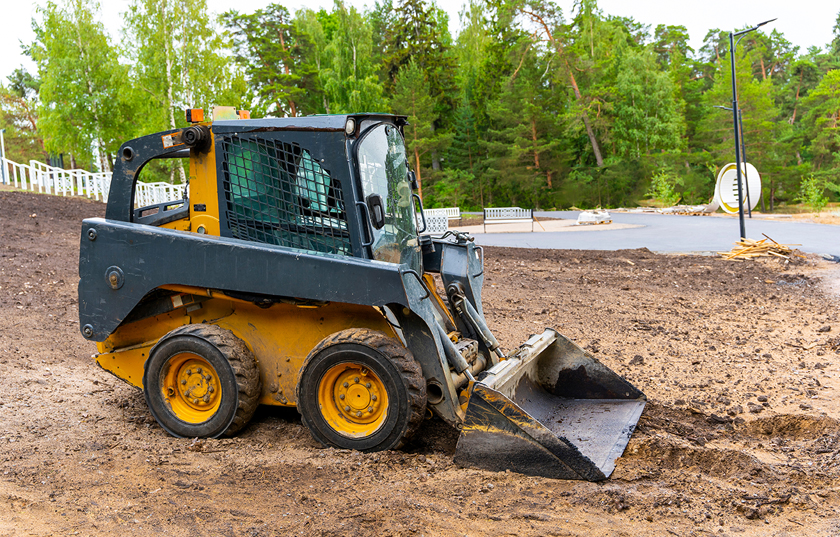
Skid steer tires and wheels play a critical role in machine performance, safety, and operating cost. Choosing the wrong tire type, tread, or wheel setup can lead to premature wear, frequent downtime, and higher cost per hour. This guide is designed as a practical resource for contractors, fleet managers, and operators who rely on skid steers daily and need dependable ground-contact solutions.
At Tag Equipment, we supply skid steer tires and wheels built for Canadian job site conditions, with h4 inventory support across Ontario and Canada-wide shipping. This guide explains how different tire constructions, tread designs, sizes, and wheel configurations affect performance so you can make informed decisions that protect uptime and productivity.
Quick Picks by Job Site
Different applications place very different demands on skid steer tires. Matching tire construction to job site conditions is one of the most effective ways to control operating costs and maintain productivity.
Snow And Municipal Work
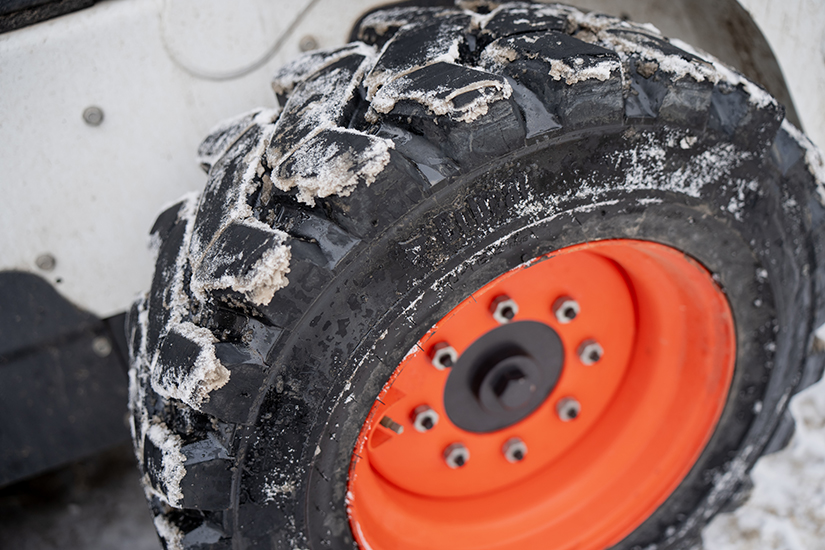
Winter operations demand consistent traction, predictable braking, and resistance to damage from ice, salt, and debris. Solid flat-proof tires or severe-duty tread designs are commonly used for snow removal because they eliminate flat-related downtime during storms. R4 treads and other winter-friendly tread patterns provide better surface contact on hard-packed snow and plowed pavement. Mounted tire and wheel assemblies are especially valuable in municipal and contractor snow operations where fast swaps reduce downtime during peak events.
Demolition And Recycling
Demolition sites expose tires to sharp debris such as rebar, concrete, scrap metal, and glass. Pneumatic tires frequently fail in these environments, leading to delays and safety risks. Solid flat-proof skid steer tires are the preferred choice due to their puncture resistance, cut-resistant compounds, and long wear life. Extra-deep lug patterns help maintain traction while protecting the tire carcass in aggressive conditions.
Rental Fleets
Rental machines are exposed to a wide range of operators and applications. Solid tire assemblies reduce service calls, minimize liability from flats, and deliver predictable wear across the fleet. Pre-mounted tire and wheel assemblies allow rental operators to return machines to service quickly with minimal labour.
Landscaping And Pavement Work
Surface protection is often a priority on finished properties and paved areas. Non-marking solid tires and moderate lug patterns help reduce scuffing while maintaining stability. Correct tire width also plays an important role in minimizing surface disturbance and improving control.
For application-specific guidance, the Tag Equipment team can help confirm the right setup through the Contact Us page.
Solid vs. Pneumatic vs. Foam-Filled vs. Flat-Proof
Understanding how different tire constructions behave helps avoid mismatched expectations on ride quality, durability, and operating cost.
Pneumatic Skid Steer Tires
Air-filled pneumatic tires provide the most cushioning and ride comfort. They are commonly used for landscaping, snow removal, and general-purpose work on cleaner sites. While they have a lower upfront cost, they require regular pressure checks and are vulnerable to punctures. Flats often occur at inconvenient times and can quickly erode productivity.
Foam-Filled Tires
Foam-filled tires begin as pneumatic tires and are injected with foam to eliminate air pressure. They reduce the risk of flats while retaining some flexibility. However, added weight, higher cost, and limited serviceability make them a transitional option rather than a long-term solution for severe environments.
Solid Flat-Proof Tires
Solid skid steer tires are manufactured from solid rubber compounds and contain no air. This construction eliminates punctures entirely and delivers predictable performance in demolition, recycling, and industrial applications. While ride comfort is firmer than pneumatic tires, the trade-off is significantly reduced downtime, longer wear life, and lower total cost per hour.
A simple selection rule applies in most cases. If uptime and puncture resistance are critical, solid flat-proof tires are usually the best option. If ride comfort and lower initial cost are priorities on cleaner sites, pneumatic tires may still be appropriate.
Why Solid Tire Assemblies Cut Downtime and Total Cost
Downtime caused by flat tires is one of the most common and expensive interruptions on skid steer job sites. Solid flat-proof tires remove this failure point entirely. When supplied as mounted tire and wheel assemblies, installation time is reduced, and bead-related issues are eliminated.
Solid tires also deliver predictable wear patterns, allowing contractors to plan replacements instead of reacting to failures. Common skid steer sizes such as 10×16.5, 12×16.5, and 14×17.5 are available with multiple tread options suited to demolition, snow, and mixed applications. Over time, fewer service calls, reduced labour, and longer replacement intervals typically outweigh the higher upfront investment.
When to Use Pneumatic or Foam-Filled Tires
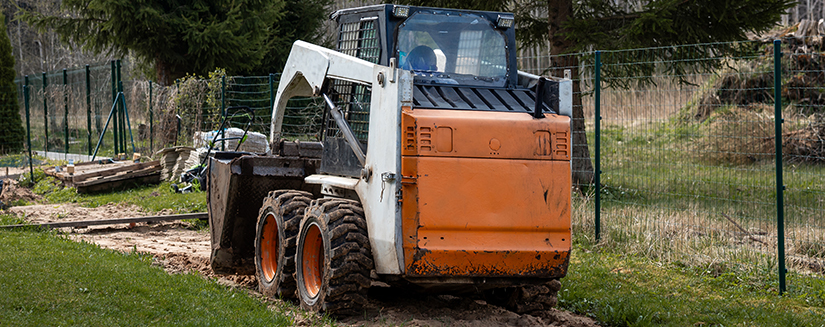
Pneumatic tires remain a practical choice for operators working long distances on pavement or turf where comfort and surface protection matter. Foam-filled tires may suit sites with occasional puncture risk where some cushioning is still desired. In both cases, load ratings, inflation pressure, and duty cycle must be managed carefully to avoid premature wear.
Sizes, Patterns, and Compounds
Correct tire sizing and tread selection directly influence traction, stability, and tire life. Wider tires increase flotation on soft ground but can reduce turning efficiency. Narrower profiles concentrate ground pressure, improving bite on hard or abrasive surfaces.
Tread depth affects both traction and wear. Deeper lugs provide better grip and puncture resistance but increase rolling resistance on concrete and asphalt. Compound hardness also matters. Harder compounds resist cuts and heat buildup in abrasive environments, while softer compounds improve grip and ride quality but wear faster.
Matching size, tread, and compound to the dominant job site conditions reduces wear and improves overall machine efficiency.
Tread Choices
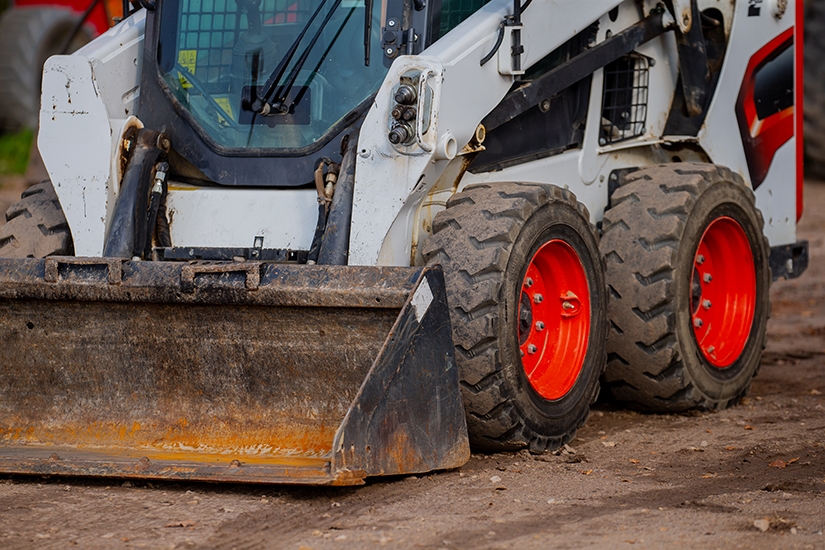
Standard Lug Patterns
Designed for mixed job sites where a balance between traction, wear, and ride quality is required.
Extra-Deep Lug Patterns
Ideal for demolition, scrap yards, and rough terrain. They offer longer wear life and improved puncture resistance, but are slower on hard surfaces.
Non-Directional Tread
Provides consistent traction in forward and reverse, making it well-suited for confined or repetitive work.
Snow-Friendly R4 Tread
Increases surface contact and stability on snow and ice, reducing wheel spin during winter operations.
Compounds
Cut-resistant compounds protect tires from chunking and tearing in recycling and demolition environments. Heat-resistant blends extend life on hard surfaces. Non-marking compounds are essential for indoor work and finished surfaces where scuffing is unacceptable.
Mounts and Rims: Getting the Hub, Offset, and Width Right
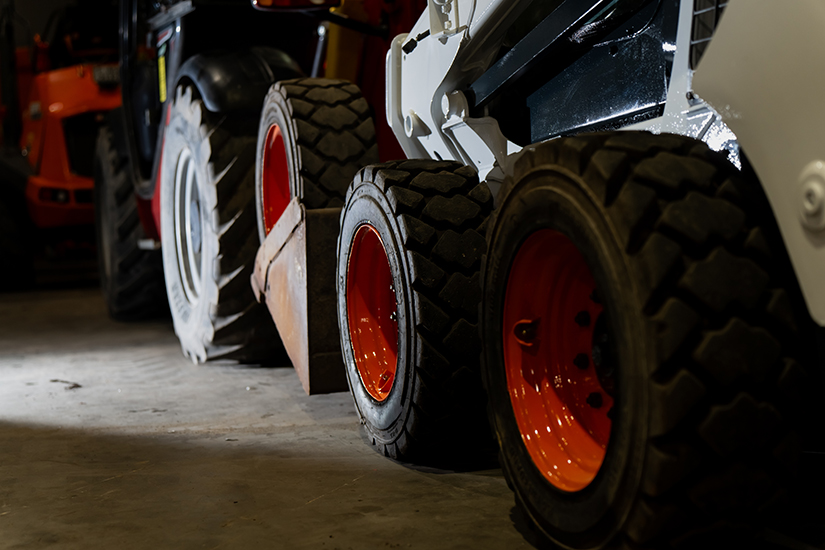
Wheel fitment is as important as tire selection. Incorrect bolt patterns, offset, or rim width can cause vibration, uneven wear, and bearing stress. Pre-mounted tire and wheel assemblies help ensure correct alignment, faster installation, and reduced risk of bead damage.
Mounted assemblies are especially valuable for solid flat-proof tires, where correct fitment directly affects longevity and performance.
OEM vs. Aftermarket Wheels: What Matters for Fitment
Aftermarket steel wheels can perform as well as OEM when specifications are correct. Load rating, hub thickness, centre bore, and clearance around chain cases or guards must be verified. Providing the machine make, model, and serial number helps ensure accurate fitment. This information can be submitted through the Contact Us page.
Application-Specific Picks for Ontario Contractors
Demolition and Scrap
Solid flat-proof tires with extra-deep tread and cut-resistant compounds deliver the best durability and uptime.
Snow and Ice
Solid or severe-duty R4 tread designs offer consistent winter traction with minimal downtime.
Landscaping
Moderate lug solids or pneumatic options with correct width reduce surface damage while maintaining control.
Rental Fleets
Solid tire assemblies provide predictable wear, fewer service calls, and faster machine turnaround.
Maintenance and Life Extension
Even the most durable skid steer tires benefit from proper operation and routine inspection. Avoiding excessive spinning, managing ballast correctly, and addressing damage early all contribute to longer service life. Rotating tires and maintaining consistent sets across all four positions reduces uneven wear and unexpected failures.
Air Pressure and Rotation Cadence
For pneumatic tires, correct inflation maintains footprint, traction, and sidewall integrity. Pressure should be checked regularly and adjusted for load and surface conditions. Rotating tires front to rear helps balance wear, particularly on abrasive sites. Tag Equipment can provide pressure guidance by tire size and application through the Contact Us page.
Get Pricing and Confirm Fitment
For pricing, availability, and fitment confirmation on skid steer tires and wheels, including mounted tire and wheel assemblies, contact Tag Equipment. Our team will help match the right solution to your machine, application, and operating conditions so you can stay productive with minimal downtime.