
The Complete Guide to Rubber Tracks for Skid Steers
Choosing the right rubber tracks for skid steers, compact track loaders (CTLs), and mini excavators directly affects traction, durability, ride quality, and machine uptime. Whether you’re replacing worn tracks on a single machine or maintaining a mixed-brand fleet, selecting the correct track size, tread pattern, and construction helps maximize performance while reducing unnecessary downtime.
This guide explains how rubber tracks work, how to choose the right fitment, what tread patterns perform best in different applications, and the signs that indicate replacement is necessary. You’ll also learn what distinguishes OEM-spec rubber tracks from lower-quality alternatives and how proper maintenance can extend undercarriage life.
Although many operators search for rubber tracks for skid steers, traditional skid steer loaders use wheels, while rubber track systems are designed for compact track loaders (CTLs), multi-terrain loaders (MTLs), and mini excavators. Because these machines are commonly grouped together on construction sites, the term “skid steer rubber tracks” has become widely used when referring to tracked compact equipment.
Choosing the right rubber track starts with accurate fitment. TAG Equipment supplies durable, OEM-spec rubber tracks for compact track loaders, mini excavators, and other compact equipment across Canada, backed by expert fitment guidance and fast fulfilment from multiple warehouse locations. Whether you’re replacing a single track or maintaining a mixed-brand fleet, the right solution helps reduce downtime and keep your equipment working productively.
What Are Rubber Tracks for Compact Track Loaders and Mini Excavators?
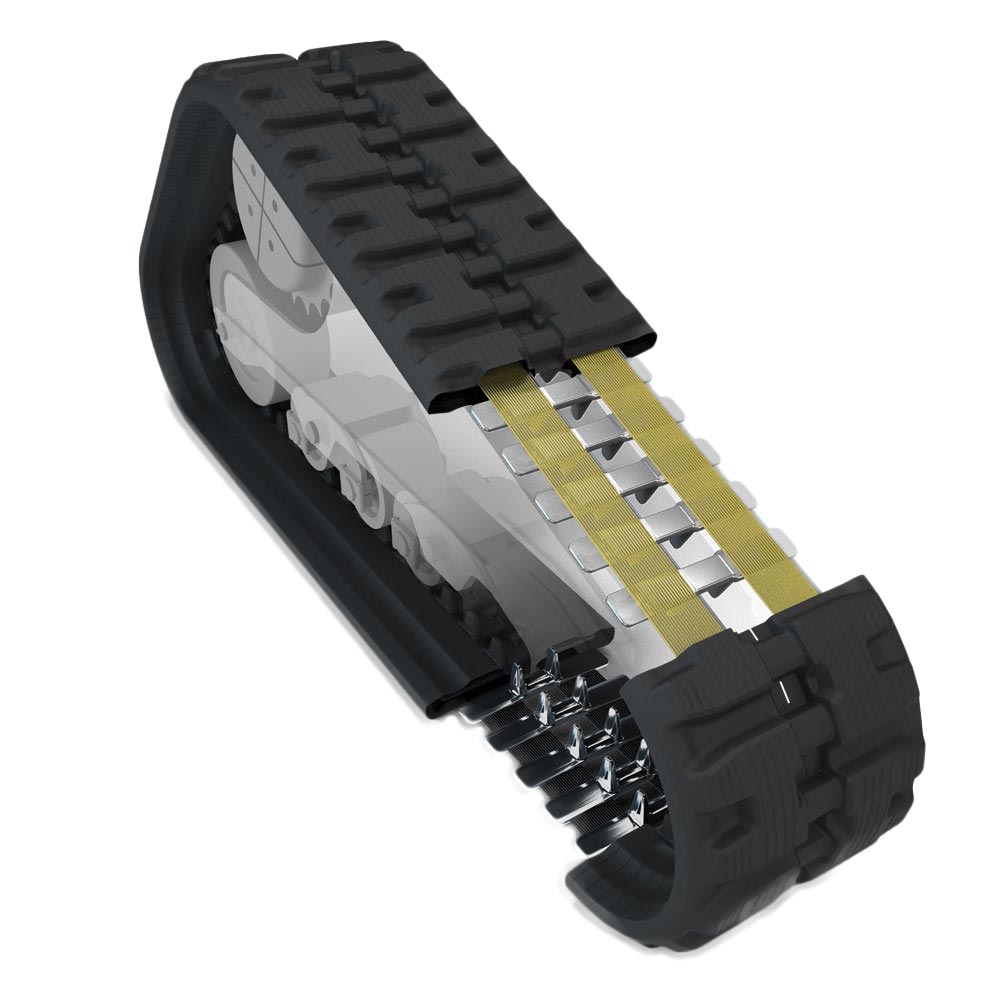
Rubber tracks are engineered track systems that replace conventional tires on compact track loaders, multi-terrain loaders, and mini excavators. Designed with reinforced steel cables and durable rubber compounds, they distribute machine weight over a larger surface area, improving traction, flotation, and stability while reducing ground disturbance.
Unlike traditional wheeled skid steers, CTLs rely on rubber tracks to navigate soft, uneven, or muddy terrain where tires may struggle for grip. Mini excavators also benefit from rubber tracks by providing stable digging platforms while minimizing damage to finished surfaces such as asphalt, concrete, and landscaped areas.
These machines are commonly used across construction, landscaping, utility installation, demolition, agriculture, and site preparation, where changing ground conditions demand dependable traction and consistent machine performance.
Proper fitment is just as important as track quality. Selecting the correct width, pitch, and link count ensures the track engages the undercarriage correctly, reducing unnecessary wear on sprockets, rollers, and idlers while improving ride quality and service life.
Whether you’re replacing worn tracks or outfitting a new machine, choosing rubber tracks for compact equipment built to OEM specifications helps maximize productivity while protecting your investment. Contractors operating tracked loaders can also explore compact track loader rubber tracks designed specifically for their machine.
Benefits of Rubber Tracks Compared to Tires
Rubber tracks provide several advantages over tires in applications where traction, flotation, and stability are essential. For contractors working on soft ground, uneven terrain, or muddy job sites, tracks often deliver better overall performance and improved machine control.
One of the biggest benefits is increased traction. The larger contact area allows compact equipment to maintain grip on loose soil, gravel, clay, and wet ground while reducing wheel slip. This improves productivity by allowing operators to work more efficiently in challenging conditions.
Rubber tracks also create significantly lower ground pressure than tires. By spreading machine weight across a wider footprint, they minimize rutting and reduce damage to lawns, finished landscapes, and sensitive job sites. This makes tracked machines particularly valuable for landscaping, residential construction, and utility work.
Operators also benefit from improved ride comfort and machine stability. Rubber tracks absorb vibration more effectively than tires, helping reduce operator fatigue during long workdays while providing greater confidence on slopes or uneven terrain.
Although tires remain the preferred choice for high-speed travel on hard surfaces and frequent road use, rubber tracks excel wherever traction and flotation are priorities.
For contractors looking to maximize uptime in demanding environments, investing in durable rubber tracks can significantly improve machine performance. Pairing tracked equipment with the right skid steer attachments further increases productivity across a wide range of applications.
How to Choose Rubber Tracks for CTLs and Skid Steers
Choosing the right rubber tracks begins with accurate fitment. Even small differences in size can affect track tension, ride quality, and overall undercarriage performance.
Every rubber track is identified by three measurements:
- Track width
- Pitch (distance between drive lugs)
- Number of links
A typical rubber track size is written as 450 × 86 × 56, representing the track width, pitch, and number of links. All three measurements must match your machine’s specifications. Incorrect sizing can lead to poor sprocket engagement, accelerated wear, improper track tension, and unnecessary stress on the undercarriage.
Operating conditions should also influence your selection. Contractors working primarily on rock, demolition sites, or abrasive surfaces may benefit from heavy-duty track designs, while general construction and landscaping applications are often well-suited to standard-duty tracks.
Tread pattern is another important consideration. Aggressive tread designs improve traction in mud and loose soil, while smoother patterns offer better ride quality and reduced vibration on hard-packed surfaces.
Machine weight also plays a role. Larger compact track loaders place greater stress on track systems than smaller mini excavators, making quality construction and proper reinforcement increasingly important.
Mixed-brand fleet owners should avoid assuming that similarly sized machines use identical tracks. Differences in undercarriage design between manufacturers make machine-specific fitment essential.
Working with a knowledgeable supplier helps eliminate uncertainty. Experienced fitment specialists can verify machine specifications, recommend the appropriate tread pattern, and ensure compatibility before ordering.
Whether you’re replacing compact track loader rubber tracks or mini excavator rubber tracks, accurate fitment from the start helps reduce downtime and extend service life.
Understanding Rubber Track Tread Patterns
Rubber track tread patterns are designed to balance traction, ride quality, durability, and wear characteristics for different job-site conditions.
| Primary Application | Recommended Tread |
|---|---|
| General construction | C-pattern |
| Mud and loose soil | Zig-zag |
| Landscaping | Multi-bar |
| Pavement / hard-packed | Block |
C-pattern tracks are among the most versatile options, offering strong traction while promoting even wear across mixed terrain. They perform well in general construction, grading, and landscaping applications.
Zig-zag tread patterns enhance traction in mud, clay, and loose soil by improving self-cleaning characteristics that reduce material buildup between lugs.
Multi-bar designs distribute machine weight more evenly while minimizing vibration and ground disturbance, making them suitable for turf-sensitive applications.
Block-pattern tracks provide a smoother ride and excellent stability on compacted surfaces, making them a popular choice for contractors who frequently work on pavement or finished sites.
No single tread pattern is ideal for every job. Contractors working primarily in muddy conditions often prioritize maximum traction, while those operating on asphalt or compacted gravel may prefer smoother-running designs that improve ride comfort and reduce vibration.
Application-specific track selection also contributes to more even wear distribution, helping extend overall track life while maintaining predictable machine performance.
When in doubt, choose the tread pattern that matches the conditions where your machine spends most of its operating hours rather than the occasional job. Choosing OEM-spec rubber tracks in Canada with the appropriate tread pattern ensures your machine performs efficiently across the environments where it works most often.
Compact Track Loader Rubber Tracks vs. Mini Excavator Rubber Tracks
Although they appear similar, compact track loader and mini excavator rubber tracks are engineered for different operating requirements.
Compact track loaders are designed to travel at higher speeds while carrying heavier loads across varied terrain. Their rubber tracks prioritize flotation, traction, and durability under continuous travel and frequent turning.
Mini excavators, by comparison, spend much of their operating time digging rather than travelling. Their tracks are optimized for stability during excavation, allowing the machine to maintain a secure platform while supporting concentrated digging forces.
Undercarriage designs also differ. CTLs typically feature suspended undercarriage systems that improve ride quality, while mini excavators use configurations designed for controlled movement and precise positioning.
Because these machines operate differently, rubber tracks should never be selected solely by appearance. Proper machine-specific fitment ensures correct engagement with sprockets, rollers, and idlers while maintaining expected performance.
TAG Equipment supplies compact track loader rubber tracks and mini excavator track options compatible with many leading OEM brands, including Bobcat, CAT, Kubota, John Deere, Case, Takeuchi, New Holland, Yanmar, Komatsu, and more.
Signs Your Rubber Tracks Need Replacement
Rubber tracks naturally wear over time, but recognizing early warning signs helps prevent unexpected downtime and protects the undercarriage from additional damage.
Visible cracking is often one of the first indicators of ageing. While minor surface cracks may be cosmetic, deeper cracking or chunking can weaken the track structure and reduce overall durability.
Exposed steel cords are a clear sign that replacement is necessary. Once internal reinforcement becomes visible, the track has reached the end of its service life and should be replaced promptly.
Uneven tread wear, missing lugs, or damaged tread blocks can reduce traction and place additional stress on the machine. Likewise, tracks that repeatedly derail or become difficult to tension may have stretched beyond their usable limits.
Operators may also notice increased vibration, rougher ride quality, reduced traction, or more frequent de-tracking. These changes often indicate that the track or supporting undercarriage components are approaching the end of their service life.
Replacing worn tracks before they fail completely helps minimize costly downtime while protecting sprockets, rollers, and idlers from accelerated wear. During replacement, it’s also advisable to inspect these undercarriage components to ensure they’re in good condition before installing new tracks.
Browse replacement rubber tracks or explore skid steer rubber track replacement options before your busy season begins.
Common Causes of Premature Rubber Track Wear
Many rubber track failures result from operating conditions or maintenance practices rather than manufacturing defects.
Incorrect track tension is one of the most common causes of premature wear. Tracks that are too tight place unnecessary stress on internal components, while loose tracks are more likely to derail.
Aggressive spinning, pivot turns on abrasive surfaces, and frequent operation on sharp debris can accelerate tread wear and damage internal reinforcement.
Frequent operation on pavement accelerates wear because rubber generates additional heat on hard surfaces. Whenever possible, minimize unnecessary travel on asphalt or concrete to help extend track life.
Routine undercarriage inspections also play an important role. Worn sprockets, rollers, or idlers can shorten the lifespan of otherwise healthy tracks by creating uneven loading and abnormal wear patterns.
Keeping the undercarriage clean and removing packed mud, rocks, or debris helps maintain proper track alignment while reducing unnecessary stress during operation.
Investing in durable OEM-spec rubber tracks and following recommended maintenance practices can significantly improve service life while lowering long-term ownership costs.
OEM-Spec Rubber Tracks in Canada: What to Look For
Not all rubber tracks are built to the same standard. OEM-spec tracks are designed to meet manufacturer fitment requirements while delivering the durability contractors expect in demanding applications.
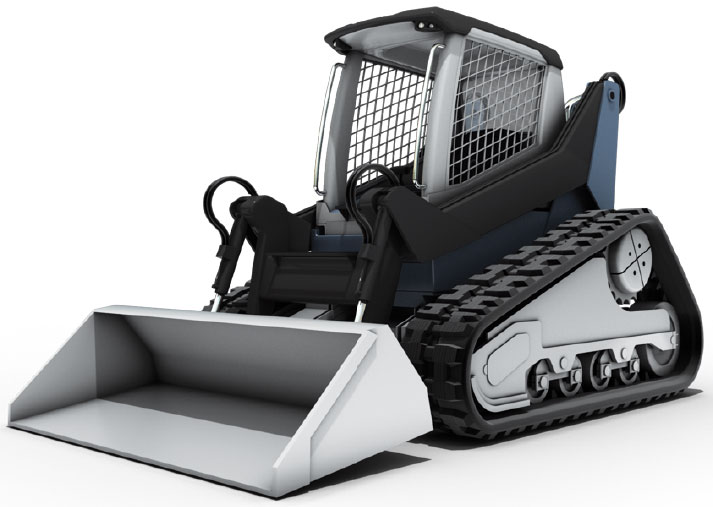
Quality begins with reinforced continuous steel cable construction and durable rubber compounds engineered to resist cuts, abrasion, and weathering. Consistent manufacturing also ensures proper pitch, lug spacing, and dimensional accuracy for dependable installation and long-term performance.
Internal construction matters just as much as tread design. Well-built tracks distribute machine loads more evenly, helping reduce stress throughout the undercarriage while maintaining reliable traction across changing terrain.
Precision manufacturing also ensures the track fits consistently around the undercarriage. Proper engagement with sprockets, rollers, and idlers helps distribute loads evenly, reducing unnecessary stress that can shorten both track and component life.
Although lower-cost alternatives may appear similar, inconsistent manufacturing tolerances can lead to poor fitment, accelerated wear, or premature failure. For many contractors, minimizing downtime ultimately provides greater long-term value than choosing the lowest initial purchase price.
TAG Equipment supplies OEM-spec rubber tracks from trusted manufacturers, including Trackster, CAMSO, and ITR America, providing reliable solutions for compact equipment operating across Canada.
With expert fitment assistance and fast fulfilment from multiple warehouse locations, contractors can confidently source OEM-spec rubber tracks in Canada that match their machine and application. Durable construction and precise manufacturing help maximize uptime while reducing long-term ownership costs.
Rubber Track Maintenance Best Practices
Routine maintenance helps maximize rubber track performance while reducing the likelihood of unexpected downtime.
Perform daily visual inspections for cuts, missing tread blocks, exposed steel cords, or signs of abnormal wear. Keeping the undercarriage clean also prevents packed debris from affecting alignment or increasing wear on moving components. Addressing small cuts or damaged lugs early helps avoid more significant failures and unexpected downtime.
Track tension should be checked regularly according to manufacturer recommendations, particularly after installing new tracks or working in muddy conditions.
Whenever possible, avoid prolonged high-speed travel on hard pavement, which can increase heat buildup and accelerate tread wear.
During track replacement, inspect sprockets, rollers, and idlers for wear. Replacing damaged components at the same time helps support longer rubber track service life while promoting smoother operation.
Seasonal inspections before peak construction or landscaping periods also help identify wear before it becomes a costly breakdown.
Choosing the Right Rubber Track Supplier in Canada
Selecting the right supplier involves more than finding the lowest price. Accurate fitment, dependable inventory, and knowledgeable support all contribute to keeping your equipment productive.
An experienced supplier can verify machine specifications, recommend appropriate tread patterns, and help avoid costly sizing mistakes before an order is placed.
During peak construction season, waiting several days for replacement tracks can delay projects and increase equipment downtime. Working with a supplier that stocks common track sizes and provides knowledgeable fitment support helps get machines back to work faster.
Contractors managing mixed-brand fleets also benefit from suppliers who understand compatibility across multiple manufacturers and can provide expert guidance for different machine types.
TAG Equipment specializes in rubber tracks for compact equipment, offering responsive support, Canada-wide shipping, and fast fulfilment from multiple warehouse locations for rubber tracks and skid steer tires.
Browse TAG Equipment rubber tracks or explore the available compact track loader track inventory to find the right solution for your machine.
Find the Right Rubber Tracks for Your Machine
Before ordering replacement rubber tracks, identify your machine’s make, model, and track size to ensure accurate fitment. Matching the correct width, pitch, and link count is essential for proper undercarriage performance, consistent traction, and longer service life. Choosing the correct track the first time helps reduce installation issues, minimize downtime, and protect your investment.
Whether you operate a compact track loader, multi-terrain loader, or mini excavator, choosing durable OEM-spec rubber tracks designed specifically for your machine provides dependable traction, longer service life, and improved productivity across a wide range of job-site conditions.
If you’re unsure which rubber tracks fit your machine, the TAG Equipment team can help verify specifications and recommend the best solution for your application.
Browse our complete selection of rubber tracks, explore CTL rubber tracks, or view mini excavator rubber tracks to find the right fit for your equipment. If you’re unsure which replacement your machine requires, the TAG Equipment team can help verify the correct specifications before you order.