Bobcat rubber tracks wear down gradually, but waiting too long to replace them can lead to undercarriage damage, poor traction, unsafe operation, and costly downtime. Common warning signs include cracking, stretched tracks, broken lugs, repeated de-tracking, uneven wear patterns, and exposed steel cords. Recognizing these issues early helps protect your machine, reduce repair costs, and maintain productivity on demanding job sites.
Although many operators search for replacement tracks for “skid steers,” rubber tracks are used on Bobcat compact track loaders (CTLs) and mini excavators rather than traditional wheeled skid steer loaders. Replacing worn tracks at the right time helps maintain traction, protects the undercarriage, and reduces costly downtime.
This guide explains the most common signs of worn rubber tracks, what causes premature wear, how long Bobcat rubber tracks last, when repair is no longer practical, and how to choose the right replacement for your machine. You’ll also find practical rubber track maintenance tips that can help extend track life and improve machine performance in demanding operating conditions.
4 Warning Signs It’s Time to Replace Your Bobcat Rubber Tracks
Every operator should include rubber track inspections as part of a regular maintenance routine. Catching wear early helps prevent costly undercarriage damage while keeping your Bobcat operating safely and efficiently.
Use this quick inspection checklist before every busy season or whenever you notice changes in machine performance.
Quick Inspection Checklist
- Deep cracks or missing rubber
- Loose or stretched tracks
- Broken or missing lugs
- Repeated track derailment
- Uneven tread wear
- Exposed steel reinforcement
If you notice one or more of these issues, it’s time to consider durable replacement tracks before additional undercarriage damage occurs.
Cracks in the Rubber Track
Cracks develop naturally as rubber ages, but heavy use on rocky terrain, demolition sites, abrasive pavement, and prolonged UV exposure can accelerate deterioration. While small surface cracks are often cosmetic, deeper cracks indicate the rubber compound is beginning to lose its structural integrity.
If left unaddressed, cracks can spread until the internal steel reinforcement becomes exposed, significantly increasing the risk of track failure.
Warning signs include:
- Deep or widening cracks
- Missing pieces of rubber
- Exposed steel cords
- Rapidly increasing crack length
Replacing worn rubber tracks before cracking becomes structural helps avoid costly repairs and unexpected downtime.
Reduced Track Tension or Stretching
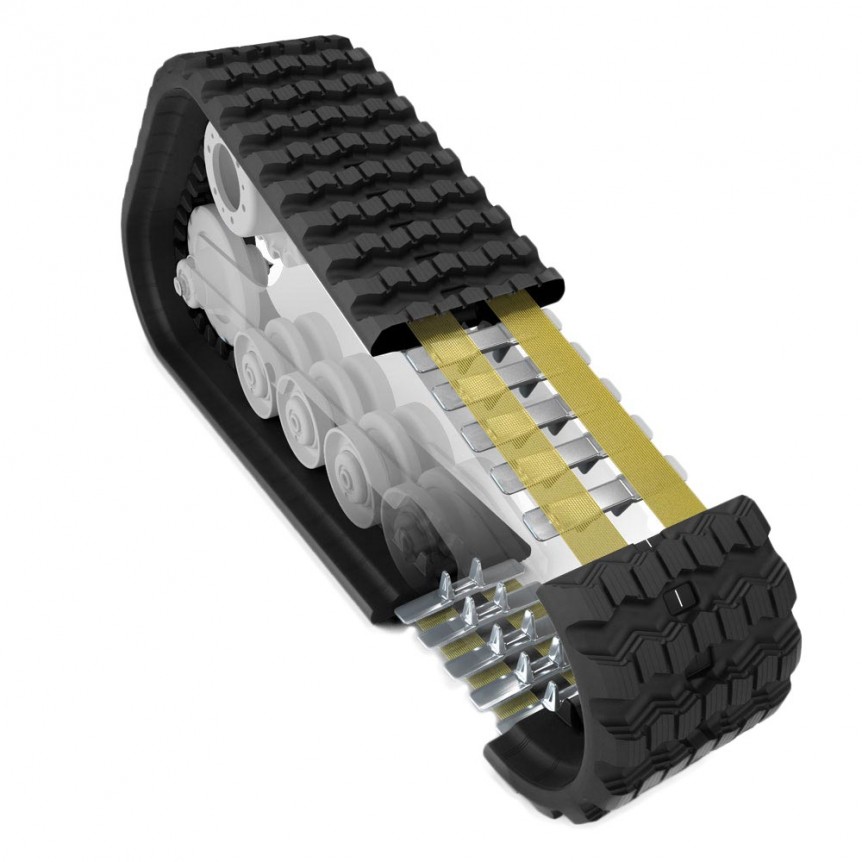
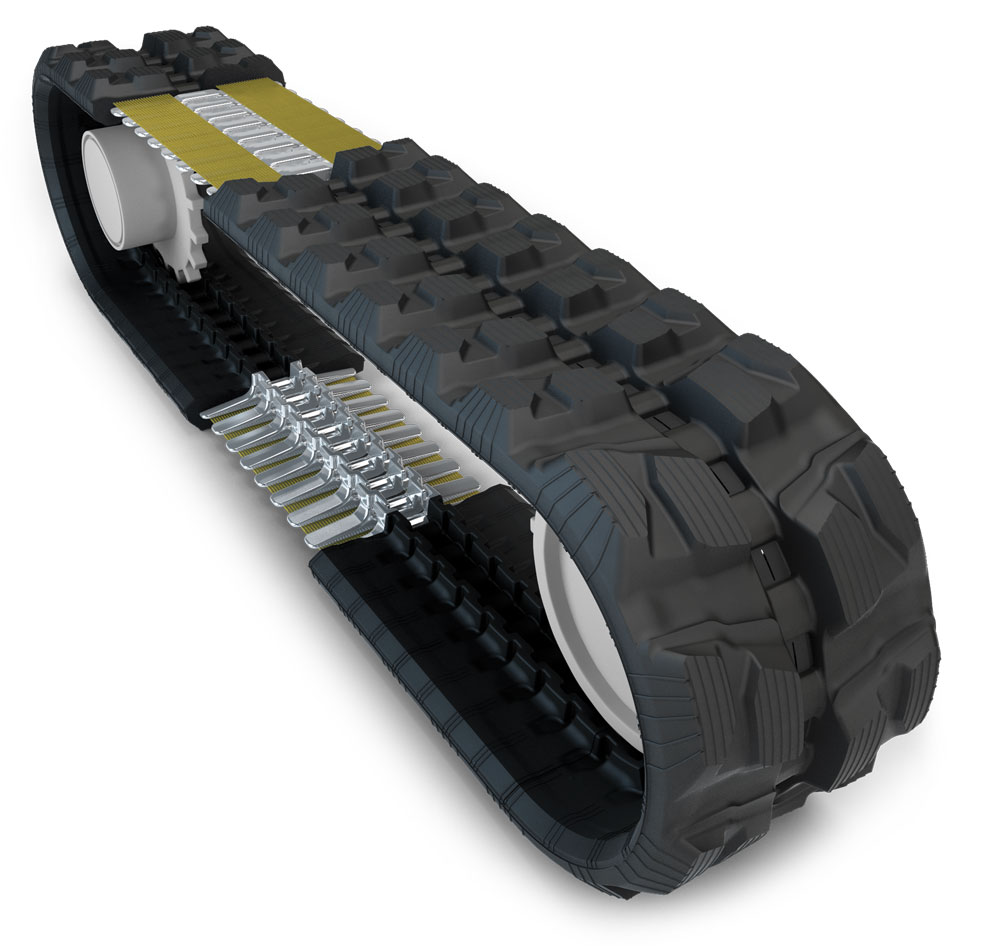
Rubber tracks gradually stretch as the rubber and internal steel reinforcement experience thousands of operating hours under load.
As stretching increases, maintaining proper track tension becomes more difficult. Operators often notice excessive sag between the rollers and increasingly frequent tension adjustments until proper tension can no longer be maintained. At this point, the track is more likely to derail while placing additional stress on sprockets, rollers, and idlers.
Common symptoms include:
- Frequent tension adjustments
- Excessive track sag
- Poor machine responsiveness
- Tracks repeatedly coming off
If normal adjustments no longer restore the correct tension, replacement is generally the safest and most cost-effective option.
Sprockets Skipping or Tracks Frequently Derailing
The sprocket and rubber track are designed to work together. As either component wears, the sprocket teeth may begin skipping over the drive lugs instead of engaging smoothly.
Operators often notice jerking, slipping, or popping during travel. In more severe cases, the track may derail completely.
Ignoring these symptoms increases the risk of:
- Damaged guide lugs
- Accelerated sprocket wear
- Roller damage
- Unplanned downtime
- Unsafe operating conditions
Repeated de-tracking is one of the clearest signs of failing tracks and should never be ignored.
Lugs Tearing or Breaking Off
Drive lugs provide the traction and stability your Bobcat depends on every day. They commonly become damaged because of worn sprockets, incorrect track tension, aggressive turning, or debris trapped within the undercarriage.
Once lugs begin tearing away from the track, traction decreases and the sprocket can no longer engage properly. Continuing to operate with broken lugs places additional stress throughout the undercarriage while making the machine harder to control.
If several lugs are missing or damaged, replacement is typically the most reliable long-term solution.
Request fitment support before undercarriage damage worsens, or browse our selection of durable replacement tracks to find the correct fit for your Bobcat.
What Causes Bobcat Rubber Tracks to Wear Out Faster?
While every rubber track eventually reaches the end of its service life, operating conditions and maintenance practices can significantly shorten its lifespan. Understanding these factors helps reduce ownership costs and improve machine uptime.
Common Causes of Premature Wear
- Aggressive turning: Counter-rotating and spinning in place create unnecessary friction that accelerates lug wear.
- Frequent pavement operation: Asphalt and concrete generate more heat and abrasion than dirt or soft ground.
- Incorrect track tension: Tracks that are too tight increase stress on internal steel reinforcement, while loose tracks are more likely to derail.
- Debris buildup: Mud, gravel, frozen material, and construction debris trapped in the undercarriage increase wear on rollers, sprockets, and idlers.
- Mixed operating conditions: Constantly moving between pavement, gravel, mud, and demolition debris creates uneven wear patterns.
- Worn sprockets and rollers: Installing new tracks over worn undercarriage components can significantly reduce service life.
- UV exposure: Long-term outdoor storage accelerates rubber ageing and surface cracking.
Common Operator Mistakes
Daily operating habits and routine maintenance have a major influence on track life.
Avoid:
- Aggressive spinning
- High-speed pivot turns
- Unnecessary travel on pavement
- Operating with incorrect track tension
- Delaying routine inspections
Cleaning the undercarriage, checking tension regularly, and inspecting sprockets, rollers, and idlers help maximize the service life of your compact track loader rubber tracks while reducing unexpected downtime.
Preventative Maintenance Tip: A few minutes spent cleaning the undercarriage and checking track tension at the end of each workday can significantly reduce premature wear over the life of the machine.
How Long Do Bobcat Rubber Tracks Last?
One of the most common questions operators ask is how long Bobcat rubber tracks last. The answer depends on how the machine is used, the terrain it operates on, and how well the tracks are maintained.
On average, Bobcat rubber tracks last between 400 and 2,000 operating hours, depending on the machine, terrain, and maintenance practices. Machines working primarily on soft ground, such as dirt, sand, or mud, often reach the upper end of that range. Equipment operating regularly on abrasive surfaces like pavement, gravel, crushed concrete, or demolition sites will typically require replacement much sooner.
Operator habits also make a significant difference. Frequent spinning, aggressive turning, incorrect track tension, and poor maintenance all shorten service life, while routine inspections and proper cleaning help maximize it.
| Operating Conditions | Typical Lifespan | Wear Severity |
|---|---|---|
| Soft soil, dirt, mud | 1,500 to 2,000 hours | Low |
| Landscaping and turf | 1,200 to 1,800 hours | Moderate |
| Mixed terrain | 800 to 1,200 hours | Moderate to High |
| Pavement and gravel | 600 to 1,000 hours | High |
| Demolition and abrasive surfaces | 400 to 800 hours | Severe |
Routine maintenance remains one of the biggest factors affecting track life. Regular inspections, proper tension adjustments, and cleaning the undercarriage after each shift can significantly improve service life. If your machine operates on multiple surface types, selecting the correct multi-terrain loader tracks and following recommended maintenance practices will help reduce premature wear.
Should You Repair or Replace Rubber Tracks?
Not every damaged rubber track needs immediate replacement, but knowing when repairs are no longer practical can help prevent expensive downtime and undercarriage damage.
Minor surface cracking or cosmetic wear may not affect performance right away. However, once structural damage develops, replacement is usually the safest and most cost-effective option.
| Condition | Monitor | Replace Now |
|---|---|---|
| Light surface cracking | ✓ | Low |
| Minor cosmetic wear | ✓ | Moderate |
| Deep cracks | ✓ | |
| Exposed steel cords | ✓ | |
| Multiple missing lugs | ✓ | |
| Tracks that repeatedly derail | ✓ | |
| Tracks that no longer hold proper tension | ✓ |
Exposed steel cords are one of the clearest indicators that replacement should not be delayed. Once moisture reaches the internal reinforcement, the structural integrity of the track quickly deteriorates.
Similarly, tracks that continue to derail or require constant tension adjustments often indicate that the rubber has stretched beyond its serviceable limits. Continuing to operate with severely worn tracks places additional stress on sprockets, rollers, and idlers, increasing overall repair costs.
Once structural damage affects performance, replacement is generally the safest long-term solution.
Browse our selection of durable OEM-spec rubber tracks to find replacements designed for consistent fitment and long service life.
Choosing the Right Replacement Rubber Tracks
Choosing the correct replacement track involves more than matching the make and model of your Bobcat. Proper fitment, tread pattern, and construction all influence traction, ride quality, undercarriage wear, and overall machine performance.
Every rubber track is identified by three measurements:
- Track width
- Pitch
- Number of links
All three dimensions must match your manufacturer’s specifications exactly. Installing the wrong size can lead to improper sprocket engagement, excessive vibration, accelerated wear, and repeated de-tracking.
The tread pattern should also match your primary application.
| Application | Recommended Tread |
|---|---|
| Landscaping and turf | Low-disturbance or turf tread |
| General construction | C-pattern |
| Mud and loose soil | Aggressive tread |
| Demolition and rocky terrain | Aggressive tread |
Wider tracks improve flotation on soft ground, while narrower tracks offer better manoeuvrability in confined work areas. Always confirm fitment using your machine model and track specifications rather than assuming similarly sized machines use the same replacement track.
Track quality is equally important. OEM-spec rubber tracks provide consistent dimensions, dependable sprocket engagement, durable rubber compounds, and reinforced internal construction designed for demanding job site conditions.
For a more detailed explanation of track sizing, tread selection, and fitment, explore our complete rubber track selection guide.
Talk to TAG Equipment for fitment guidance before ordering replacement tracks to ensure you select the correct specifications for your Bobcat and application.
Inspecting Your Undercarriage During Track Replacement
Before installing new rubber tracks, inspect the undercarriage for worn sprockets, rollers, idlers, and alignment issues. Worn support components often accelerate wear on new tracks, reducing performance and increasing long-term ownership costs.
Whenever replacing tracks, inspect the following components:
- Sprockets for worn or hooked teeth
- Bottom rollers for uneven wear or damage
- Top rollers where applicable
- Front and rear idlers
- Track guides
- Track alignment
- Frame damage or debris buildup
Pay particular attention to sprockets and rollers. These components work together with the rubber track, and excessive wear can prevent smooth engagement while increasing stress throughout the system.
If worn support components are identified, replacing them during track replacement helps maximize the service life of your new tracks.
A complete inspection helps your rubber track systems perform as intended while maximizing service life and reducing the risk of premature wear.
TAG Equipment Supplies Bobcat Tracks for All Models
We stock high-quality replacement rubber tracks compatible with nearly every Bobcat compact loader and mini excavator model. Whether you’re running older equipment or the latest series, we provide OEM-fit solutions that maximize uptime and minimize costly repairs.
We carry replacement tracks for the following makes and models:
| Bobcat 864 | Bobcat T132 | Bobcat T250 H | Bobcat T630 |
|---|---|---|---|
| Bobcat 864 F | Bobcat T140 | Bobcat T300 | Bobcat T650 |
| Bobcat 864 G | Bobcat T180 | Bobcat T300 H | Bobcat T750 |
| Bobcat MT50 | Bobcat T180 H | Bobcat T320 | Bobcat T770 |
| Bobcat MT52 | Bobcat T190 | Bobcat T450 | Bobcat T830 |
| Bobcat MT55 | Bobcat T190 H | Bobcat T550 | Bobcat T870 |
| Bobcat T110 | Bobcat T250 | Bobcat T590 |
Explore our full range of construction equipment track parts for fast replacement options.
Tips to Extend the Life of Your Bobcat Rubber Tracks
Even the best rubber tracks wear over time, but proper maintenance and operating habits can significantly increase service life. A few minutes spent inspecting and maintaining your tracks each week can help reduce downtime, improve performance, and delay the need for replacement.
Follow these technician-recommended maintenance tips:
- Maintain proper track tension. Check track tension regularly and adjust it according to Bobcat’s specifications. Tracks that are too tight increase stress on the undercarriage, while loose tracks are more likely to derail.
- Clean the undercarriage after every shift. Remove mud, rocks, asphalt, and other debris that can accelerate wear on tracks, rollers, sprockets, and idlers.
- Avoid aggressive turning. High-speed pivot turns and excessive spinning increase friction and wear, particularly on hard surfaces like asphalt and concrete.
- Store equipment properly. Whenever possible, keep your machine indoors or under cover to reduce prolonged exposure to UV rays and harsh weather that can accelerate rubber deterioration.
- Inspect the undercarriage regularly. Worn sprockets, rollers, and idlers can significantly shorten the lifespan of otherwise healthy tracks.
Weekly Inspection Checklist
Each week, take a few minutes to inspect:
- Track tension
- Tread wear
- Cracks or chunking
- Missing lugs
- Sprocket condition
- Roller and idler wear
- Debris buildup inside the undercarriage
Consistent maintenance not only extends track life but also helps reduce operating costs and improve machine reliability. If you have questions about maintenance intervals or replacement timing, contact TAG Equipment for rubber track maintenance support.
FAQs About Replacing Bobcat Rubber Tracks
How Often Should Bobcat Rubber Tracks Be Replaced?
Can Damaged Rubber Tracks Be Repaired?
What Causes Bobcat Rubber Tracks to Derail?
Are OEM-Spec Rubber Tracks Worth It?
How Do I Identify My Bobcat Rubber Track Size?
Know When to Replace and Upgrade with Confidence
Replacing worn Bobcat rubber tracks before they fail helps protect your undercarriage, improve traction, and keep your equipment productive when it matters most. Choosing the correct replacement track for your machine and application helps reduce downtime while supporting longer service life.
Whether you operate a single Bobcat or manage a mixed equipment fleet, TAG Equipment provides durable OEM-spec rubber tracks, expert fitment guidance, and Canada-wide shipping to help keep your machines working.
Browse our selection of replacement rubber tracks or contact the TAG Equipment team for expert fitment guidance before ordering.